Babies grow fastest in their first six months, gaining around 113–200g (4–7oz) a week. After six months, growth slows slightly to about 85–140g (3–5oz) a week.
From around six months, the iron your baby stored before birth starts to run low, and breast milk or formula alone can no longer meet all their needs. Solid foods now provide the extra energy and nutrients for growth. Because their stomachs are still small, think little and often.
×3
birth weight
On average, babies triple their birth weight by their first birthday.
How often should my baby feed?
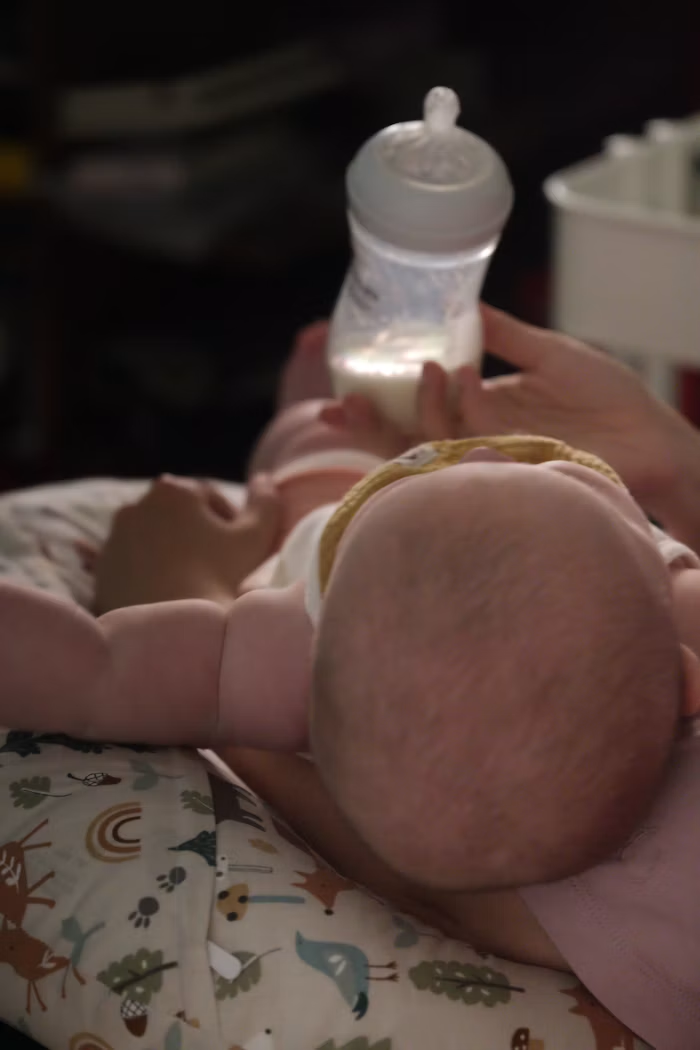
Feed on demand and follow your baby’s cues. These are typical patterns, not rules.
Signs your baby is ready
Most babies show all three signs together at around 6 months:
Sits and holds their head steady
Stays in a sitting position with little support
Coordinates eyes, hands and mouth
Looks at food, picks it up and puts it in their mouth
Swallows food
Rather than pushing it back out with their tongue
Waking at night, chewing fists or wanting extra milk are normal behaviours, not signs of readiness for solids.
How meals build up
Every baby moves at their own pace, but a typical journey looks like this:
Around 6 months
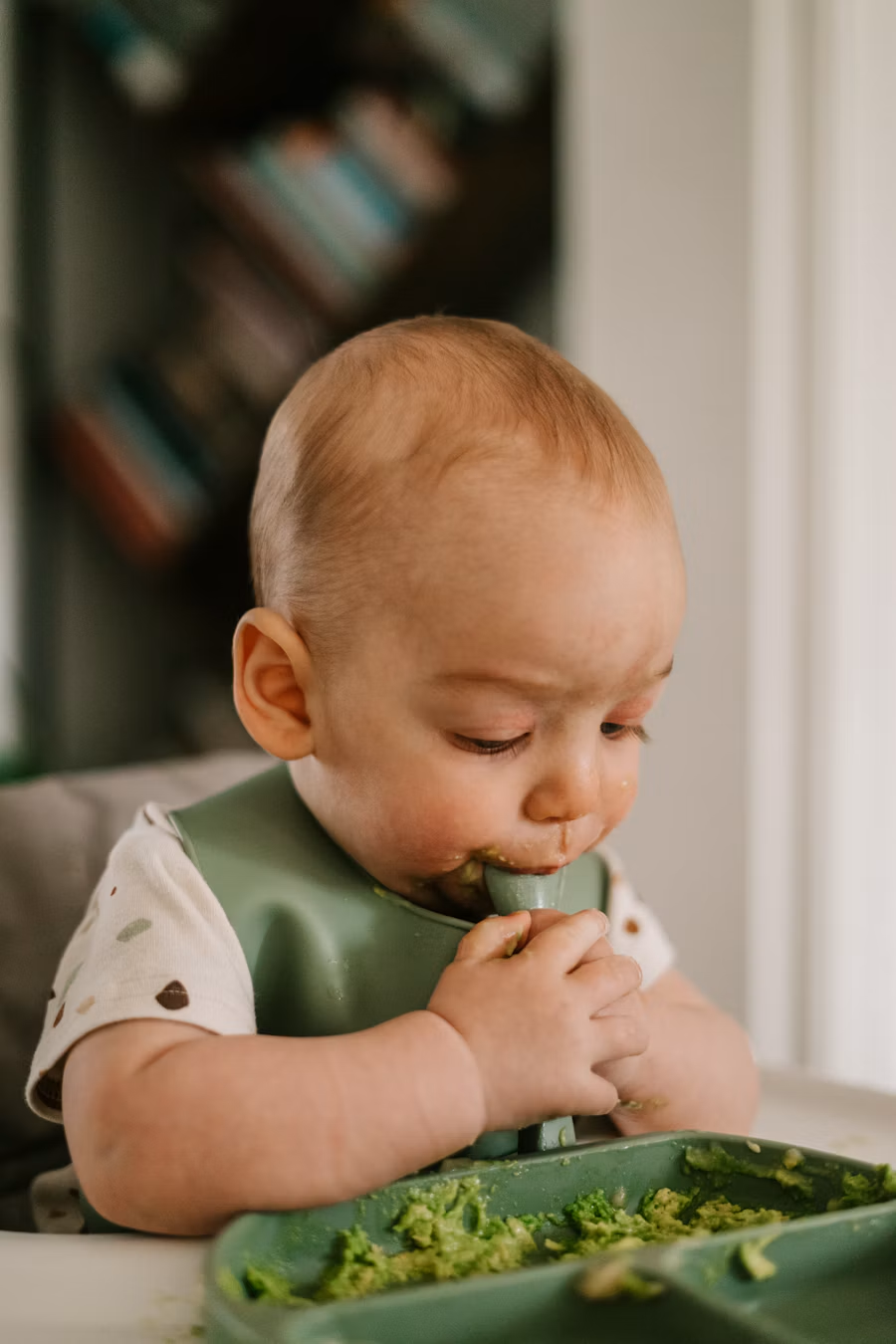
Smooth or mashed foods and soft finger foods, once a day
7–9 months
Lumpier textures and 3 small meals a day
10–12 months
Chopped family foods, 3 meals plus healthy snacks
Breast milk or formula stays your baby’s main drink until 12 months.
Your baby's second six months
Development, milk, weaning and teething.
Monthly development
Your baby becomes more mobile, curious and social every month. You may notice:
Around 7 months: sitting without support and passing toys from hand to hand
Around 9 months: crawling, pulling up to stand, and babbling sounds like “mama” and “dada”
Around 12 months: cruising along furniture or taking first steps, waving, and first words
Milestones are a guide, not a deadline. Bring any questions to your baby's regular check-ups.
Follow-on milk
Follow-on milk is made for babies from 6 months. It isn’t essential: breast milk or a first infant formula meets your baby’s milk needs until 12 months.
Talk to your doctor before switching
Don’t give cow’s milk as a main drink before 12 months
Small amounts of cow’s milk are fine in cooking from 6 months
Offer sips of water from an open or free-flow cup with meals.
Weaning
Offer a wide variety of foods, and include iron-rich ones every day: meat, fish, eggs, lentils, beans and iron-fortified cereals.
No added salt or sugar
No honey before 12 months
No whole nuts or whole grapes, which are choking risks
Always stay with your baby while they eat
Gagging is normal as your baby learns to handle new textures. Keep offering. It can take 10 tries before a new taste is accepted.
Teething
Most babies get their first tooth at around 6 months. Signs include drooling, red or sore gums, chewing on things and extra fussiness.
Give a chilled (not frozen) teething ring
Gently rub sore gums with a clean finger
Avoid amber teething necklaces, which can cause choking
Brush twice a day with a smear of fluoride toothpaste once teeth appear
See a doctor if your baby has a high temperature. Teething doesn't cause fever.
This information is for general guidance only and doesn’t replace advice from your doctor, midwife or health visitor.
Breastfeeding is the best source of nourishment for infants. The World Health Organization (WHO) recommends exclusive breastfeeding for the first six months of life, with continued breastfeeding alongside appropriate complementary foods up to two years of age or beyond.
In situations where breastfeeding proves difficult, parents should seek healthcare professional advice on how to best meet their child’s nutritional needs.